Introduction
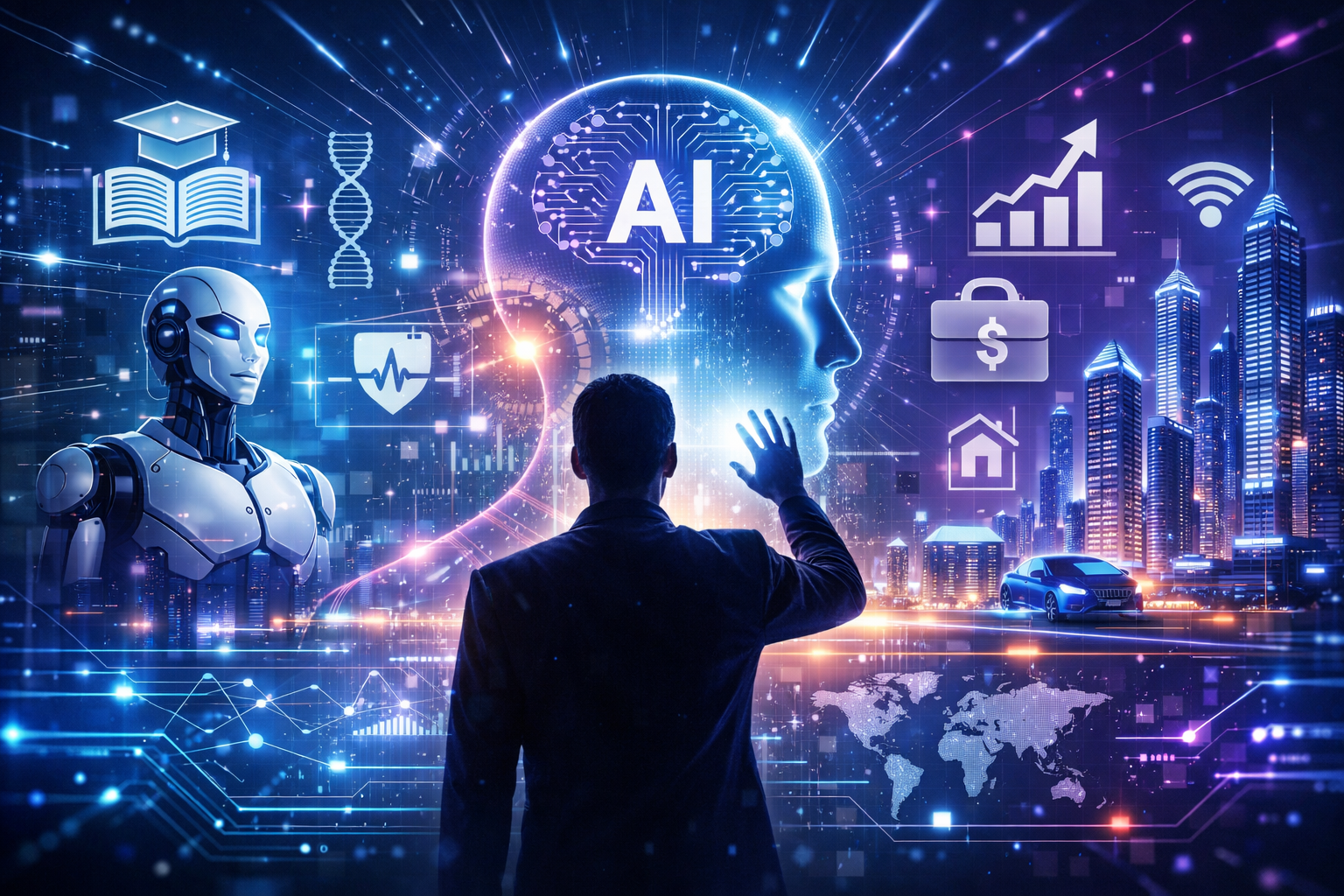
Artificial Intelligence (AI) has emerged as one of the most transformative technologies of the 21st century. From healthcare to education, business to entertainment, AI is reshaping the way humans interact with technology and the world around them. Its rapid development promises numerous benefits, but it also raises ethical, social, and economic challenges that need careful consideration.
Applications of AI in Daily Life
AI has penetrated nearly every aspect of daily life. Virtual assistants like Siri and Alexa help manage schedules, answer questions, and control smart homes. AI-driven recommendation systems suggest movies, music, and products based on individual preferences. Autonomous vehicles, predictive navigation, and smart traffic management are making transportation safer and more efficient. In healthcare, AI algorithms assist in disease diagnosis, medical imaging analysis, and drug discovery, significantly improving patient care.
Impact on Education
Artificial Intelligence is transforming education by personalizing learning experiences. Adaptive learning platforms analyze students’ strengths and weaknesses, offering customized lesson plans. Virtual tutors and AI-based language applications enhance understanding, while online classrooms powered by AI allow real-time interaction with global educators. This technology is democratizing education, making knowledge more accessible than ever before.
Economic and Industrial Influence
AI is reshaping industries by automating repetitive tasks, improving efficiency, and reducing operational costs. In manufacturing, AI-driven robots handle precision work, while predictive maintenance minimizes downtime. Businesses utilize AI for data analytics, customer service chatbots, and market forecasting. While AI increases productivity, it also disrupts traditional job markets, creating the need for new skills and workforce retraining.
Ethical and Social Considerations
Despite its advantages, AI poses ethical and social challenges. Privacy concerns arise as AI systems collect and analyze vast amounts of personal data. Bias in AI algorithms can reinforce social inequalities, while the possibility of autonomous weapons or misuse of AI raises security concerns. Society must establish regulations and ethical guidelines to ensure AI benefits humanity without causing harm.
Pros of Artificial Intelligence
- Increased Efficiency: Automates repetitive tasks and optimizes processes.
- Improved Decision-Making: Data analysis and predictive models aid businesses and governments.
- Enhanced Healthcare: AI helps in early diagnosis, treatment planning, and drug discovery.
- Accessible Education: Personalized learning tools improve student outcomes.
- Global Connectivity: AI-powered communication tools facilitate collaboration across borders.
Cons of Artificial Intelligence
- Job Displacement: Automation can replace human workers in certain industries.
- Privacy Risks: Personal data collection raises concerns about misuse.
- Bias and Inequality: AI systems may reflect existing social and cultural biases.
- Security Threats: Autonomous AI can be misused for malicious purposes.
- Overdependence: Excessive reliance on AI may reduce human problem-solving skills.
Conclusion
Artificial Intelligence is transforming modern society in profound ways, offering remarkable opportunities for innovation, efficiency, and global progress. However, these benefits come with significant challenges, including ethical dilemmas, social inequality, and economic disruption. By implementing proper regulations, promoting ethical AI development, and preparing society for the changing workforce, humanity can harness AI to create a sustainable and equitable future.
About the Author