Introduction
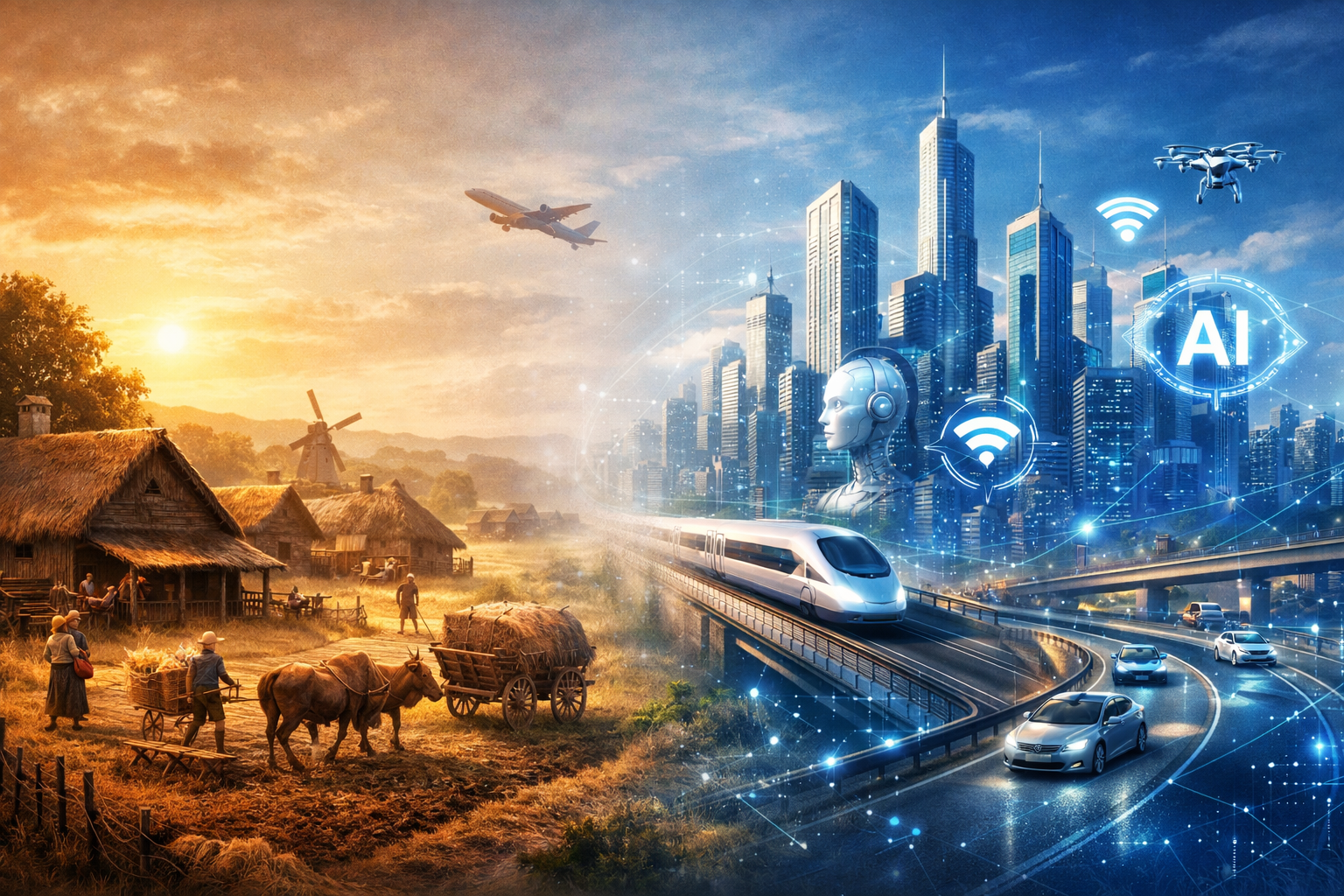
The journey from the old world to the modern world is marked by profound revolutions that reshaped human civilization. Traditional societies were largely dependent on agriculture, manual labor, and limited knowledge systems. Over time, scientific discoveries, industrial development, and technological innovation brought dramatic changes that transformed social structures, economies, and ways of life.
Life in the Old World
In the old world, life was simple but restrictive. Most people lived in rural areas and relied on farming as their primary occupation. Communication was slow, education was limited to a privileged few, and medical knowledge was underdeveloped. Power and authority were often concentrated in monarchies or feudal systems, leaving little opportunity for social mobility.
The Industrial Revolution
The Industrial Revolution marked a turning point in human history. The invention of machines, steam engines, and factories replaced hand-based production systems. This revolution increased productivity, created new employment opportunities, and led to rapid urbanization. Although it improved economic growth, it also introduced challenges such as poor working conditions and environmental pollution.
Scientific and Technological Advancements
Scientific discoveries and technological progress accelerated the transformation into the modern world. Innovations such as electricity, automobiles, telecommunication, and computers revolutionized daily life. The development of the internet and digital technology further connected societies globally, enabling instant communication and access to information.
Social and Cultural Transformation
Modernization brought significant changes to social and cultural life. Education became more accessible, democratic systems replaced absolute monarchies, and human rights gained importance. Gender equality, freedom of expression, and individualism became defining features of modern society. Cultural exchange increased as global connectivity expanded.
Economic and Political Evolution
The modern world introduced new economic and political systems. Capitalism, globalization, and international trade reshaped economies, while democratic governance promoted citizen participation. Nations became interconnected, fostering cooperation but also competition on a global scale.
Pros of Transformation to the Modern World
- Improved Living Standards: Advances in technology, medicine, and infrastructure enhanced the quality of life.
- Education Access: Knowledge is now more widely available through schools, universities, and online platforms.
- Global Connectivity: Communication and travel allow instant interaction worldwide.
- Economic Growth: Industrialization and globalization created new job opportunities and wealth.
- Social Progress: Human rights, gender equality, and democracy became more widespread.
Cons of Transformation to the Modern World
- Environmental Impact: Industrialization and urbanization led to pollution, deforestation, and climate change.
- Social Isolation: Technology sometimes reduces face-to-face interaction and traditional community bonds.
- Cultural Erosion: Rapid modernization threatens traditional cultures and values.
- Economic Inequality: Wealth and resources are not evenly distributed, creating social gaps.
- Technological Dependence: Excessive reliance on machines and digital systems can cause vulnerabilities and stress.
Conclusion
The revolution from the old world to the modern world represents one of the greatest transformations in human history. While modernization has improved living standards, education, and connectivity, it also presents challenges such as environmental issues, social inequality, and cultural erosion. By learning from the past and addressing present concerns responsibly, humanity can achieve a balanced and sustainable future.
About the Author